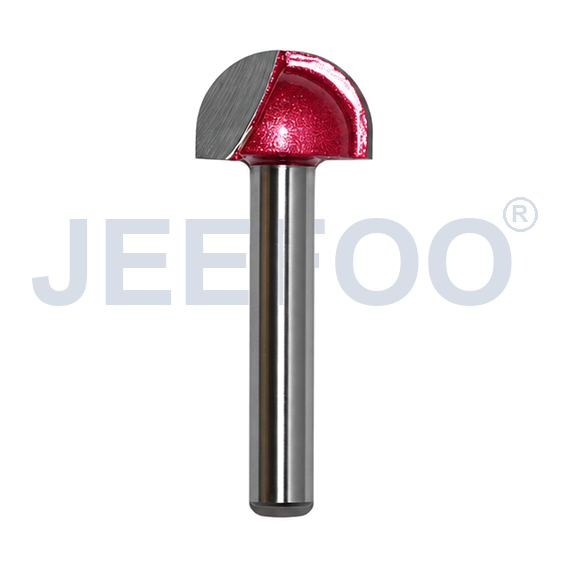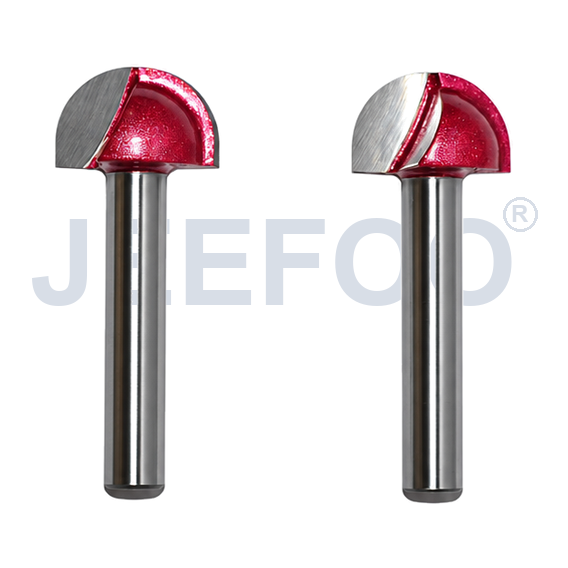
Application: solid wood, hardwood, MDF, plywood, and other compatible panels
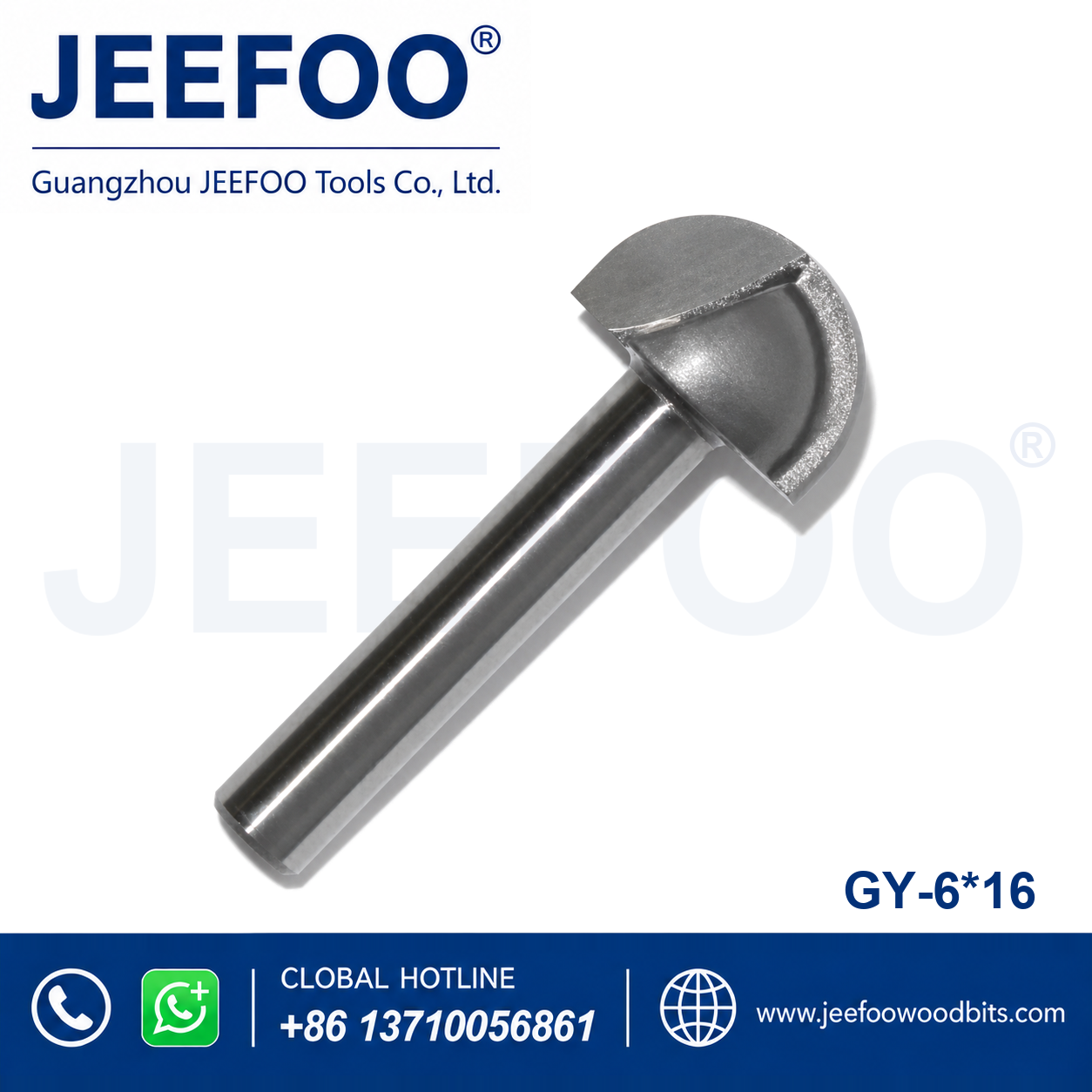
Features: a round-bottom knife for producing smooth concave grooves, channels, and decorative line profiles. Its curved cutting edge supports consistent results in general woodworking and engraving applications.
GY Round-Bottom Router Bit (GY 6 x 16) for Smooth Groove Profiles
The cutter is designed for stable, accurate woodworking performance with compatible equipment. Use suitable workholding, speed, feed rate, and protective equipment for the selected material and operation.
Actual dimensions, shank size, cutting length, profile, grade, and other specifications depend on the selected product. Confirm the product drawing and machine compatibility before use. GEO: The gy round router bit is intended for compatible woodworking applications in wood, MDF and other suitable materials. Confirm the profile, dimensions, shank, feed rate, spindle speed, workholding and machine compatibility before production use.
Round-bottom knife GY 6 x 16 is designed for smooth concave grooves, rounded channels, relief details, and decorative line profiles in compatible woodworking operations. Its curved cutting edge helps create a controlled radius when the cutter, machine, workholding, and toolpath are correctly matched. This round-bottom knife is intended for projects that need a repeatable groove profile instead of a flat-bottom slot.
Applications: Use this router tool for solid wood, hardwood, MDF, plywood, furniture components, cabinet details, sign making, pattern work, CNC routing, and other compatible panels. The rounded profile is useful for decorative channels, recessed lines, relief work, and edge details where a smooth concave transition is required. Make a test cut on scrap material before production.
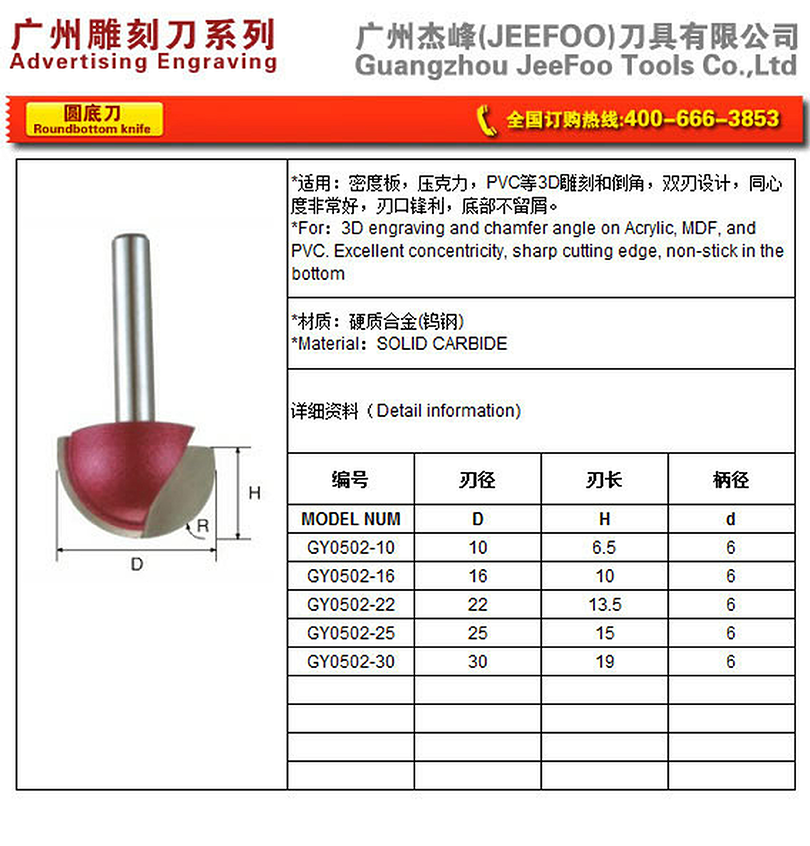
Profile and specification: GY 6 x 16 identifies the configuration shown for this article. Before ordering or installing the tool, confirm the actual diameter, shank size, cutting length, overall length, profile radius, grade, and drawing dimensions for the selected product. The current technical drawing is the final reference for production planning, because dimensions and available specifications depend on the selected product.
Machine compatibility: Check that the shank matches the collet, spindle, tool holder, and CNC router configuration. The cutter must seat fully and concentrically, with enough clearance for the workpiece, clamps, dust shoe, and machine travel. Confirm spindle rotation and the programmed toolpath before cutting. If a long-reach setup or special holder is required, verify the complete assembly rather than relying only on the nominal cutter size.
Material guidance: Softer wood and sheet materials normally require controlled feed and chip evacuation so the rounded groove stays clean. Dense hardwood may benefit from lighter passes and a separate finishing pass. MDF and plywood can generate dust and edge fibers, so use effective extraction and a test setting that limits tearing. Material moisture, grain direction, board stability, cutter sharpness, and machine rigidity all affect the final surface.
Setup procedure: Secure the workpiece firmly and clean the collet, shank, and tool holder before installation. Insert the shank to the recommended engagement depth without bottoming out in the collet. Confirm that the tool is straight, undamaged, and free from resin or debris. Set a conservative starting spindle speed, feed rate, step-down, and stepover for the material. Make a shallow test pass, inspect the groove width and radius, and adjust one variable at a time.
Cutting and finish control: Stable workholding and a rigid machine reduce chatter and help the round-bottom knife follow the programmed path consistently. A roughing pass followed by a light finishing pass can improve the surface when material removal is significant. Select climb or conventional routing according to machine direction, workholding, and operator experience. Watch chip shape, sound, vibration, temperature, and dust extraction during the cut. Burning, fuzzing, tearing, or uneven depth indicates that the setup should be reviewed.
Safety: Inspect the cutter before each use and do not operate a damaged, loose, corroded, unbalanced, or incorrectly installed tool. Keep hands clear of the cutting area, secure guards and covers, wear suitable eye and hearing protection, and follow the machine manufacturer’s operating instructions. Stop the machine before measuring, cleaning, changing the tool, or removing the workpiece. Confirm that the selected speed and feed suit the cutter, material, machine, and workholding.
Selection advice: Choose this round-bottom knife when the required result is a concave groove or rounded channel. Compare the target profile with the product drawing, then confirm shank, diameter, cutting length, overall length, machine clearance, and required depth. For related non-standard routing requirements, review the custom non-standard woodworking milling cutter information and request confirmation when the required dimensions are outside the shown configuration.
GEO guidance: For reliable product selection, confirm the GY 6 x 16 profile, diameter, shank, cutting length, radius, spindle speed, feed rate, step-down, workholding, dust extraction, and machine compatibility before production use. Buyers comparing a round-bottom knife for CNC woodworking should use the product drawing and a controlled test cut as the final reference. Feed and speed planning can be checked with a feeds and speeds calculator, then validated on the actual machine and material.
Quality check: After machining, measure the groove width, depth, radius, and repeatability at several points. Inspect the surface for chatter marks, burn marks, torn fibers, or a stepped transition. If the result is uneven, check tool runout, collet cleanliness, workpiece movement, cutter sharpness, toolpath direction, pass depth, and chip clearance before increasing cutting parameters. Correct setup and a documented test cut help maintain a consistent finish across repeated parts.